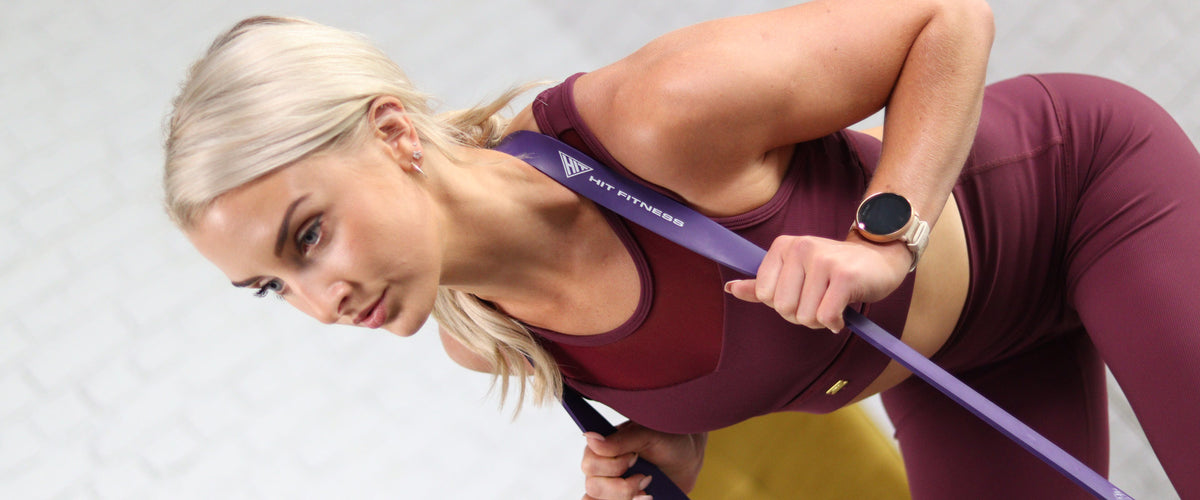
Resistance Bands and Tubes

Filters
Refine collection
Type
  • 0 Selected
Brand
  • 0 Selected
Colour
  • 0 Selected
Price
Sort by
Filters 0 Selected
Showing all 50 productsPage 2 of 2
Fitness Mad Squat Band | Medium
Fitness Mad Squat Band | Medium Lifestyle
Fitness Mad Squat Band | Medium Inside
Fitness Mad Squat Band | Medium Corner
Fitness Mad Squat Band | Medium Inside Corner
Fitness Mad Squat Band | Medium
Fitness Mad · In stock €10.95
Fitness Mad Squat Band | Light
Fitness Mad Squat Band | Light Lifestyle
Fitness Mad Squat Band | Light Inside
Fitness Mad Squat Band | Light Inside Corner
Fitness Mad Squat Band | Light Corner
Fitness Mad Squat Band | Light
Fitness Mad · In stock €10.95
Hit Fitness Power Band 60mm Blue 60kg | Pack of 5
Hit Fitness Power Band | 60mm (Blue)
Hit Fitness Power Band Bag
Hit Fitness Power Band 60mm (60kg) | Pack of 5
Hit Fitness · In stock €109.00€127.20
14% Off
UFE Fabric Resistance Band Loop 15
UFE Fabric Resistance Band Loop 15" | Set of 3
UFE · Out of Stock €19.95€21.99
9% Off
Hit Fitness Power Band 6.4mm Orange 5kg | Pack of 5
Hit Fitness Power Band | 6.4mm - 5kg (Orange)
Hit Fitness Power Band Bag
Hit Fitness Power Band 6.4mm (5kg) | Pack of 5
Hit Fitness · Out of Stock €39.95€41.95
5% Off
Fitness Mad Squat Band | Strong
Fitness Mad Squat Band | Strong Lifestyle
Fitness Mad Squat Band | Strong Inside
Fitness Mad Squat Band | Strong Corner
Fitness Mad Squat Band | Strong Inside Corner
Fitness Mad Squat Band | Strong
Fitness Mad · Out of Stock €10.95
Fitness Mad Squat Band | Set
Fitness Mad Squat Band | Light
Fitness Mad Squat Band | Light Inside Corner
Fitness Mad Squat Band | Medium
Fitness Mad Squat Band | Medium Corner
Fitness Mad Squat Band | Strong
Fitness Mad Squat Band | Strong Corner
Fitness Mad Squat Band | Set
Fitness Mad · Out of Stock €31.95€32.85
Compare products
Compare

Featured Posts

4 Unexpected Ways to Use Resistance Bands For Your Workout

Resistance bands, also known as exercise bands, are versatile fitness tools that have become increasingly popular in recent years. They are lightweight, portable, and affordable, making them a great addition to any workout routine. Many people are unaware of the extensive uses of resistance bands, and can become unsure of how to use them after purchase.

READ MORE

The Power of Power Bands

Resistance bands, or power bands, are a productive, flexible, inexpensive, and mobile training tools that can benefit an athlete's exercise regime whilst also effectively furthering their rehabilitative process. Power bands have a variety of muscles you can work.

READ MORE

Resistance Bands are rubber or latex elastic bands can be used to perform a variety of different exercises. The bands come in a variety of shapes, including loops, tubes and flat bands. They can also be used alone or attached to anchor points or handles. When stretched, the bands create tension, which strengthens and tones muscles.

In recent years, resistance bands have gained in popularity due to their effectiveness and versatility in fitness and rehab routines. They can be used by people at all fitness levels and ages. We will describe what resistance bands do, how they can be used in fitness and rehabilitation, as well as provide some examples of the exercises that you can perform with them.

Resistance Bands Workouts

Fitness enthusiasts love resistance bands because they are portable and versatile. You can use them for many different exercises including flexibility and mobility, as well as strength training. You can incorporate resistance bands into your training in a variety of ways.

  1. Bicep curls and triceps extension are some of the most popular exercises using Resistance Bands. They provide an excellent way to increase strength, endurance and tone.
  2. More experienced users can perform pull-ups and push-ups as well as dips with the aid of Power Bands to either increase the resistance, or to act like spotter, giving them that extra help to complete to movement These bands have a thicker, wider surface which makes them perfect for bull body exercises.
  3. Training Bands can also be used to perform mobility and injury prevention exercises, as well as rehabilitation. Physical therapists use them to improve range of movement and help their patients recover after injuries.

What's the difference between resistance bands and power bands?

A resistance band and a power band serve the same purpose: you use the strength of the band to create resistance and mimic exercising with free weights or weight machines, or even add extra resistance to weights or body weight movements.

The main difference between the two is the length: a power band has more length, which makes it more suitable for heavier work. For example, you can use the band to add extra weight to biceps curls (you need to stand with your feet on the band while you curl the weight up).

Resistance bands are shorter, and that makes them better suited for adding extra resistance to localized muscle targeting, like hip abductions. A good solution for rehabilitation.

Uses of Resistance bands in Rehabilitation

Resistance bands can also be used for rehabilitation programs and physiotherapy. These bands are excellent for recovering from injury, increasing range of motion and flexibility. 

Resistance bands are commonly used to improve shoulder stability and mobility. One of the most popular resistance bands exercises is the rotator cuff external rotation.

They can also improve stability and strengthen knee muscles. Resistance bands can be used to perform exercises such as leg extensions and leg curls.

They are also a very popular option for lower back rehabilitation exercises, like seated rows, usually done on a chair with your feet flat on the ground and the resistance band looped around your feet. Slowly pull the band towards your chest, bending your elbows and squeezing your shoulder blades together.

Remember to start with a low resistance level and gradually increase the resistance as your strength and flexibility improve. If you feel any pain or discomfort during the exercises, stop immediately and consult with your GP.


Show less
Resistance Bands are rubber or latex elastic bands can be used to perform a variety of different exercises. The bands come in a variety of shapes, including loops, tubes and flat bands. They can also be used alone or attached to anchor points or handles. When stretched, the bands create tension, which strengthens and tones muscles. In recent years, resistance bands have gained in popularity due to their effectiveness and versatility in fitness and rehab routines. They can be used by people at all fitness levels and ages. We will describe what resistance bands do, how they can be used in fitness and rehabilitation, as well as provide some examples of the exercises that you can perform with them. Resistance Bands Workouts Fitness enthusiasts love resistance bands because they are portable and versatile. You can use them for many different exercises including flexibility and mobility, as well as strength training. You can incorporate resistance bands into your training in a variety of ways. Bicep curls and triceps extension are some of the most popular exercises using Resistance Bands. They provide an excellent way to increase strength, endurance and tone. More experienced users can perform pull-ups and push-ups as well as dips with the aid of Power Bands to either increase the resistance, or to act like spotter, giving them that extra help to complete to movement These bands have a thicker, wider surface which makes them perfect for bull body exercises. Training Bands can also be used to perform mobility and injury prevention exercises, as well as rehabilitation. Physical therapists use them to improve range of movement and help their patients recover after injuries. What's the difference between resistance bands and power bands? A resistance band and a power band serve the same purpose: you use the strength of the band to create resistance and mimic exercising with free weights or weight machines, or even add extra resistance to weights or body weight movements. The main difference between the two is the length: a power band has more length, which makes it more suitable for heavier work. For example, you can use the band to add extra weight to biceps curls (you need to stand with your feet on the band while you curl the weight up). Resistance bands are shorter, and that makes them better suited for adding extra resistance to localized muscle targeting, like hip abductions. A good solution for rehabilitation. Uses of Resistance bands in Rehabilitation Resistance bands can also be used for rehabilitation programs and physiotherapy. These bands are excellent for recovering from injury, increasing range of motion and flexibility.  Resistance bands are commonly used to improve shoulder stability and mobility. One of the most popular resistance bands exercises is the rotator cuff external rotation. They can also improve stability and strengthen knee muscles. Resistance bands can be used to perform exercises such as leg extensions and leg curls. They are also a very popular option for lower back rehabilitation exercises, like seated rows, usually done on a chair with your feet flat on the ground and the resistance band looped around your feet. Slowly pull the band towards your chest, bending your elbows and squeezing your shoulder blades together. Remember to start with a low resistance level and gradually increase the resistance as your strength and flexibility improve. If you feel any pain or discomfort during the exercises, stop immediately and consult with your GP.
Show more